
You have been sucessfully logged out.

Our mission
Kite is a subsidiary of Gilead Sciences, founded in 2009. With its headquarters in the United States, Kite operates multiple manufacturing facilities worldwide. The European product facility for cell therapy is located in Hoofddorp, near Schiphol Airport.
We contribute to the innovation of oncological therapies and regard cell therapy as an important extension of the available treatment options for certain forms of cancer.
5 years of cell therapy
Since 2020, the European manufacturing facility has been operational. To date, more than 10.000 cell therapies have been produced at the Hoofddorp site. From Hoofddorp, we serve treatment centers in Europe, the Middle East, and South America.
Cell therapy is an innovative treatment for people with certain types of blood cancer. In this approach, the patient’s own immune cells (T-cells) are taken from the blood and modified so that they are better able to eliminate cancer cells. The therapy is custom-made for each individual patient.
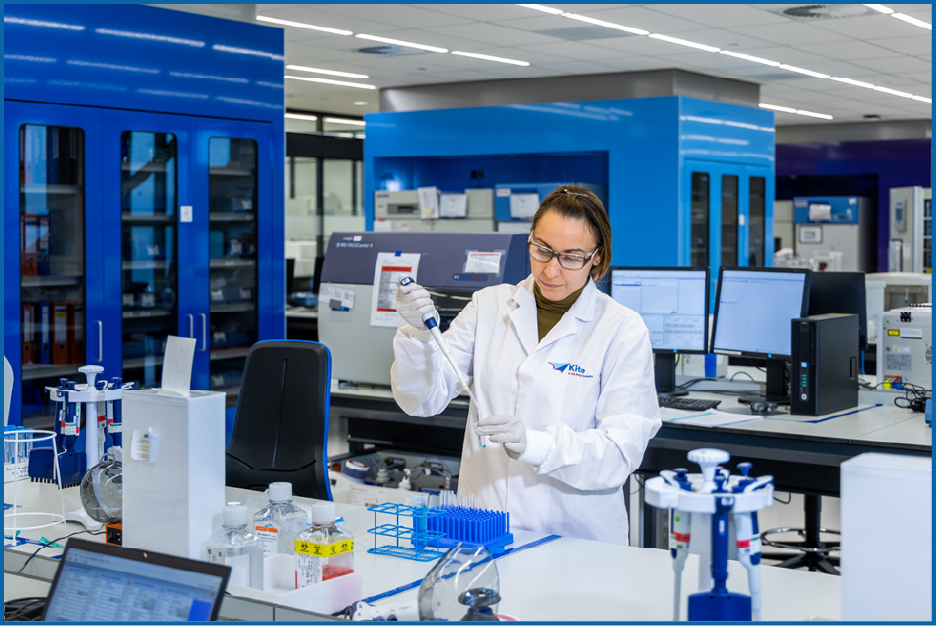
Cell therapy leverages the power of the patients own immune system.
STEP 1: The patient’s blood serves as the foundation. Through leukapheresis, the so-called T-cells are filtered from the patient’s blood. T-cells play a crucial role in defending against diseases, including certain types of blood cancer.
STEP 2: These cells are modified in the manufacturing facility. This modification adds a CAR (chimeric antigen receptor) to the surface of the T-cells. This receptor recognizes cancer cells in the patient’s body, enabling the T-cell to destroy them. After this process, the T-cells are transformed into CAR T-cells.
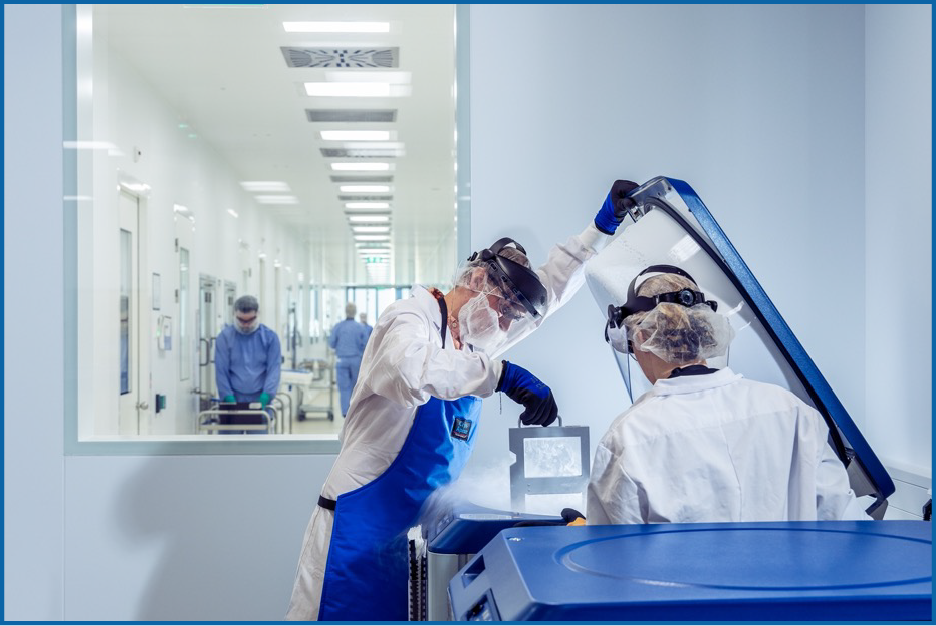
STEP 3: These CAR T-cells multiply until a sufficient amount for treatment is reached. The therapy is frozen and stored at a temperature of -180ºC, where it remains until the treatment center confirms that the cells can be shipped.
STEP 4: The patient receives their own (CAR) T-cells in a single administration.
Treatment with CAR T-cell therapy can cause (serious) side effects. Patients are therefore closely monitored by a physician in a treatment center that is specifically trained and qualified for this purpose.
Side effects can be reported via www.fagg-afmps.be (for Belgium), www.guichet.public.lu/en/entreprises/sectoriel/sante/medecins/notification-effets-indesirables-medicaments.html (for Luxembourg) or www.lareb.nl (for the Netherlands). They should also be reported to Gilead via [email protected] or via www.gilead.com/contact/report-an-adverse-event.
Reporting adverse events or side effects after a medicine has been placed on the market is important. These reports ensure that the risk-benefit profile of a medicine can be continuously monitored. Healthcare professionals and patients are asked to report all adverse events or side effects via www.fagg-afmps.be (for Belgium), www.guichet.public.lu/en/entreprises/sectoriel/sante/medecins/notification-effets-indesirables-medicaments.html (for Luxembourg) or www.lareb.nl (for the Netherlands). Adverse events or side effects can also be reported directly to the marketing authorization holder of the medicine. Adverse events or side effects that may be related to a Gilead medicine can be reported to Gilead via email at [email protected].
Gilead Sciences Netherlands BV, Claude Debussylaan 22, 1082 MD Amsterdam, The Netherlands. Tel: +31 (0)
20 718 3650.
Medical Information: [email protected]
Gilead Sciences Belgium BV, Culliganlaan, 2D, 1831 Diegem, Belgium, Tel: +32 (0) 2 401 35 50 - VAT
number: 0882 565 584.
Medical Information: [email protected]
BE-UNB-1825 | Date of preparation: February 2026